
A first consultation goes further when you arrive prepared. A little thought beforehand means the time is spent on what matters — your history, your concerns, your questions — rather than on trying to recall the name of a product you had three years ago.
A good consultation is the foundation of any treatment that follows. It is where a practitioner learns your medical history, understands what is bothering you and why, and decides whether treatment is appropriate at all. Guidance from the NHS and the Joint Council for Cosmetic Practitioners is clear that this conversation should be unhurried, and that you should never feel rushed into treatment on the day.
What to bring
Most of what matters is information, and it is far easier to gather at home than to recall in the chair.
- Your medical history. Current and past conditions, including skin conditions, cold sores, autoimmune conditions and any tendency to scar or heal slowly. Mention your mental health too, past or present; NHS guidance encourages it.
- Medicines and supplements. Everything you take, including occasional and over-the-counter products. Some affect bruising, healing or how the skin reacts to light.
- Allergies, including to anaesthetic creams, plasters or metals.
- Previous treatments, with dates. Injectables, energy-based treatments, peels and surgery, with product names and the clinic, if you have them. Some products remain in the tissue long after their visible effect has faded.
- Whether you are pregnant, breastfeeding or planning a pregnancy. Many elective treatments are postponed during this time, as safety data are limited.
- Photographs of yourself at earlier ages. Pictures from ten or fifteen years ago can show how your face has changed, which is often more useful than a photograph of someone else.
Questions worth asking any practitioner
These are reasonable questions anywhere, and the NHS recommends asking most of them before any cosmetic procedure. A good practitioner will welcome them.
What are your qualifications, and how often do you perform this treatment? You can check whether a doctor is registered with the General Medical Council, and whether other practitioners appear on an accredited register such as the JCCP or Save Face.
Who will actually perform the treatment? It is not always the person you meet at consultation, and you are entitled to know.
What are the common side effects, and what happens if there is a complication? Ask who you would contact, how you would be looked after, and whether putting a problem right would cost extra.
What follow-up is included? Aftercare is part of the treatment, not an afterthought.
What happens in the consultation
Expect to be asked a good deal before anything is suggested. A careful practitioner will want to know what is bothering you, how long it has bothered you, and what you hope will change. If you’re unsure how to describe it, our pages on concerns such as skin laxity or pigmentation may help you find the words. The area will be examined, and photographs may be taken for your records. You should then hear what a treatment involves, what recovery looks like, the realistic result, the risks, and how long any effect is likely to last.
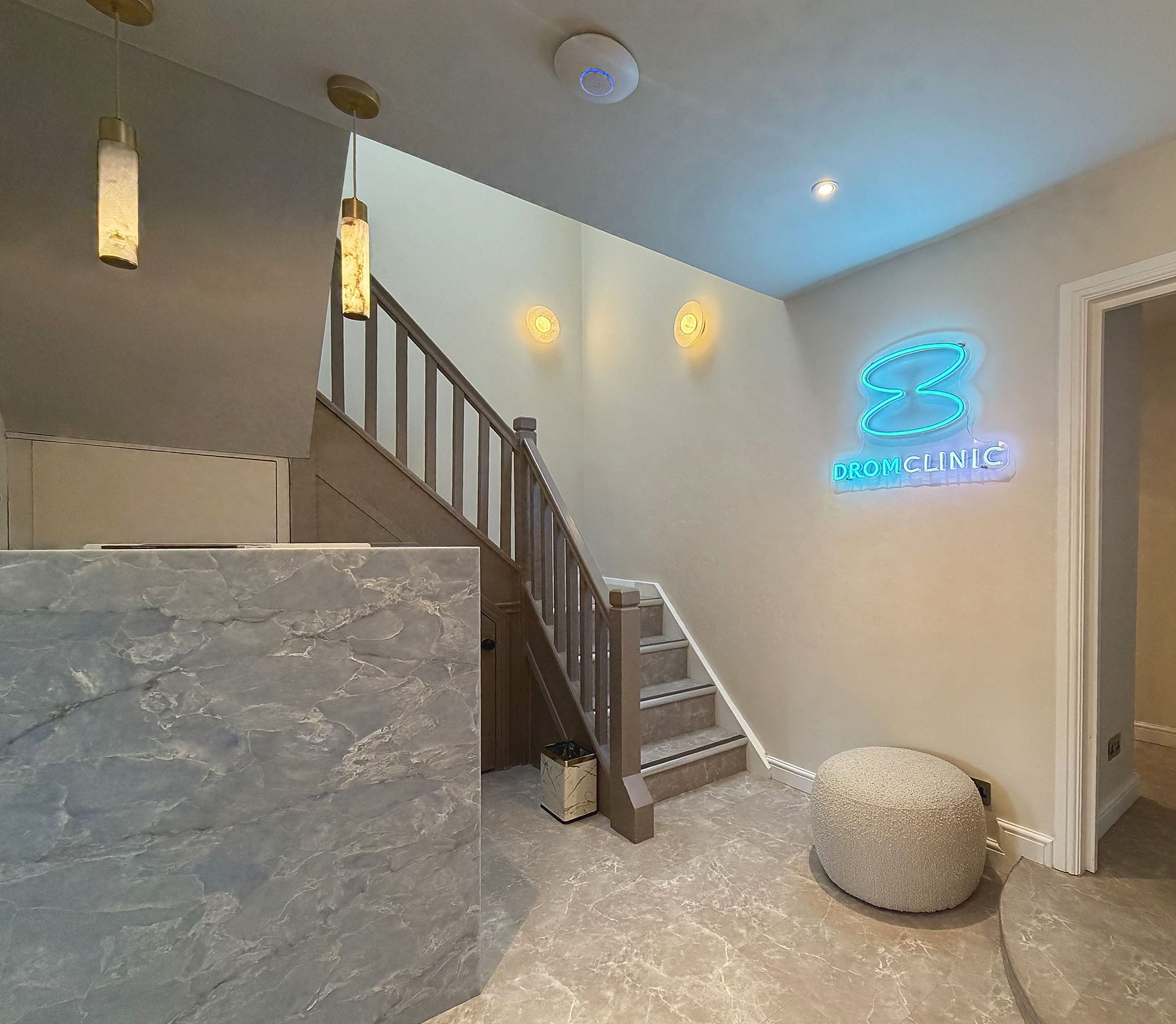
At DROM, every patient has an in-person consultation before any treatment. It is a clinical conversation, not a sales one, and we will sometimes advise that a treatment is not the right choice, or that the answer is something simpler. If a treatment is appropriate and you are certain, it may be possible to begin the same day; if you would rather go away and think, that is equally welcome. Follow-up and aftercare consultations are included.
It is fine to leave without booking
A consultation is not a commitment. The NHS advises that you should be offered a cooling-off period after any consultation, and that you can walk away if you are not completely comfortable. Take the time you need. If you leave with a clearer understanding of your skin and your options, and nothing booked, the consultation has still done its job.
When you feel ready, you can book a consultation online. Bring your questions. We would rather hear them than not.
A good consultation leaves you better informed whether or not you book anything, and you should never feel pressed to decide on the day.