Consultation First
Doctor-Led Care
Bespoke Protocols
Aftercare Included
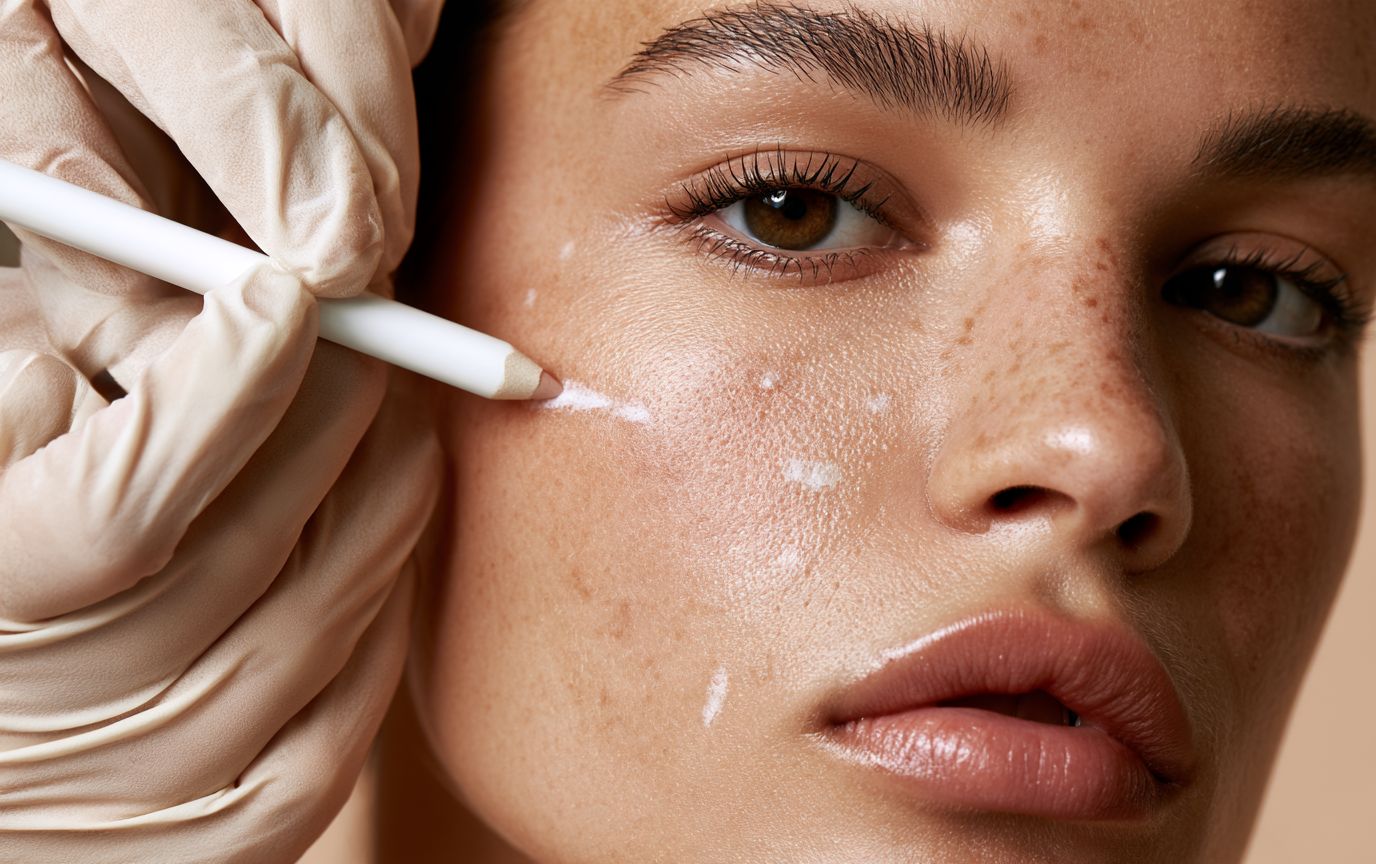
Portrait study for the FAQ page
DROM Clinic

FAQ

Before your visit

Should I prepare anything before my visit?

+

If you take aspirin or another blood thinner prescribed by a doctor, do not stop it — tell us at consultation. You may be asked to pause fish oil or vitamin E supplements, or ibuprofen taken for occasional pain. Arrive without makeup if convenient. Bring a list of any medications and prior aesthetic treatments.

visit
Treatments

Will the treatment hurt?

+

Most procedures use a fine cannula or microneedle and discomfort is mild. Topical anaesthetic is offered for sensitive areas such as the lips. Most patients describe the sensation as a brief pinch or pressure.

treatments
Treatments

How long does each treatment take?

+

Approximate durations:

  • Anti-wrinkle injections: 10 to 15 minutes
  • Dermal filler: 30 to 45 minutes
  • Skin boosters: 20 to 30 minutes
  • Energy-based devices: 30 to 60 minutes depending on area
treatments
Treatments

Can I combine treatments in one session?

+

Many treatments can be combined safely. Some require staging across visits to allow proper assessment of each result. We discuss what’s possible and what’s advisable during your consultation.

treatments
Signature protocols

What is a signature protocol?

+

A signature protocol is a planned combination of treatments rather than a single procedure. Each one addresses a concern the way it actually presents — across the whole face or region — instead of treating one area in isolation. Every protocol is designed individually around your anatomy, ageing pattern and goals.

  • Non-Surgical Face Lift
  • Facial Harmony
  • Neck & Jaw Rejuvenation
  • Natural Lip Design
  • Skin Longevity Program
protocols
Signature protocols

What does the Non-Surgical Face Lift involve?

+

Facial ageing is rarely caused by a single change. It develops through volume loss, reduced structural support and a loss of definition, which is why treating one area alone rarely looks natural.

The protocol combines next-generation hyaluronic acid fillers with collagen-stimulating calcium hydroxyapatite, placed at multiple tissue depths using ultra-refined injection techniques and a micro-droplet lifting approach. The objective is never to change your face, but to restore support and contour while preserving natural movement.

protocols
Signature protocols

How is Facial Harmony different from a single filler treatment?

+

Facial Harmony treats the face as a three-dimensional structure rather than a set of separate concerns. Every treatment begins with a full facial analysis — facial thirds, symmetry, chin projection, mandibular definition, malar projection, nasal profile and key measurements such as the nasofrontal, nasolabial and cervicomental angles.

Whether we are enhancing the chin, refining the jawline, restoring cheek support or performing non-surgical rhinoplasty, each adjustment is planned as part of the whole face. The goal is proportion and profile balance, not a different face.

protocols
Signature protocols

What is included in Neck & Jaw Rejuvenation?

+

The neck and jawline are among the first areas to show ageing, through collagen loss, skin laxity, reduced mandibular definition and submental fullness. Every plan begins with an anatomical assessment of the neck, jawline and profile to identify the underlying cause.

  • Morpheus8 for collagen remodelling and skin tightening
  • Calcium hydroxyapatite for biostimulation and structural support
  • Polynucleotides for tissue regeneration
  • Skin boosters for hydration and dermal quality
  • Hyaluronic acid fillers for jawline definition
  • Fat-dissolving injections for submental contouring, when indicated
protocols
Signature protocols

Which lip technique is right for me?

+

That is decided at assessment, not in advance. Every lip has its own anatomy and no single technique suits every patient. We assess lip shape, Cupid’s bow, projection, smile dynamics and overall facial proportions first.

Depending on the outcome you want, treatment may use Russian, French or Scandinavian (Swedish) lip techniques, lip tenting, vertical injection, linear threading, microdroplet or cannula work. For age-related change we offer Mature Lip Rejuvenation, which addresses volume loss, upper lip elongation and perioral lines rather than simply adding volume.

protocols
Signature protocols

What is the Skin Longevity Program?

+

A personalised regenerative strategy rather than a course of treatments. Skin ageing begins long before it becomes visible, so the programme is built around preservation — stimulating collagen and maintaining dermal quality over years rather than correcting damage after it shows.

Protocols may combine polynucleotides, collagen-stimulating biostimulators, skin boosters, mesotherapy, Morpheus8, Lumecca Peak IPL, Q-switched Nd:YAG laser and medical-grade skincare, selected according to your skin assessment and reviewed over time.

protocols
Devices

What is Lumecca Peak, and how is it different from standard IPL?

+

Lumecca Peak is InMode’s high-power intense pulsed light platform. It delivers high-power intense pulsed light, with shorter pulse durations and ultra-fast pulse delivery that disrupt pigment more efficiently.

In practice that means fewer sessions. Photorejuvenation is often achieved in as few as one to three sessions, treating pigmentation, redness, sun damage, age spots, freckles, broken capillaries and uneven skin tone. A sapphire cooling tip protects the surface throughout.

devices
Devices

What does the Q-switched Nd:YAG laser treat?

+

It delivers light in pulses lasting billionths of a second, breaking unwanted pigment into fragments small enough for the body to clear naturally while the surrounding skin is left untouched. We use a dual-wavelength platform: 1064 nm reaches deeper pigment and darker ink, 532 nm addresses superficial marks such as sun spots and freckles.

  • Sun spots, age spots and freckles
  • Post-inflammatory pigmentation
  • Uneven tone and general dullness
  • Tattoo ink

Pigmentation typically needs two to six sessions spaced three to six weeks apart. Tattoos require more, depending on the ink and its depth.

devices
Devices

IPL or Q-switched laser — which is right for pigmentation?

+

They work differently and are chosen by what is being treated, not by preference. Lumecca Peak covers a broad spectrum and suits diffuse sun damage, redness and vascular concerns across a whole area. The Q-switched Nd:YAG is more selective and suits defined, deeper pigment and ink.

Skin type matters as much as the concern. Both are decided at consultation, after assessment, and the two are sometimes used at different stages of the same plan.

devices
Devices

How is Morpheus8 different from microneedling?

+

Microneedling creates controlled micro-channels that prompt the skin’s own repair response, refining texture, softening scars and tightening the look of pores. It works within the skin’s upper layers.

Morpheus8 pairs micro-fine needles with bipolar radiofrequency, adding controlled heat at depth. It remodels the deeper dermis, so it is the choice where laxity and firmness are the concern rather than surface texture. Best results come from three to four sessions, four to six weeks apart.

devices
Devices

Which device treats skin laxity — Morpheus8 or Forma?

+

Both tighten, at different depths. The choice follows your anatomy and how much laxity is present.

  • Morpheus8 — radiofrequency microneedling in the deeper dermis, topical anaesthetic only, a course of three to four sessions
  • Forma — radiofrequency heat delivered through the skin's surface, usually a course of sessions
devices
Devices

Is laser hair removal safe on darker skin tones?

+

It can be, when the device and settings suit your skin type. We assess skin type and hair colour first and perform a patch test before any full treatment. All laser treatment carries some risk of burns or pigment change.

Facial hair usually needs more sessions than the body — often eight or more, every four to six weeks — and where growth is hormonally driven, top-up sessions keep the result consistent. We say so at consultation rather than after the course.

devices
Hair

What can be done about thinning hair?

+

Hair thinning rarely has one cause. Genetics, hormones, nutritional status, stress and scalp health each contribute, and treating only one of them rarely holds. Every programme begins with an assessment of your scalp, hair density, pattern of loss and relevant medical history.

From there we build a plan that may combine regenerative injectables, mesotherapy, scalp microneedling and medical-grade topical care, reviewed at set intervals so the plan follows your response rather than a fixed schedule.

hair
Hair

How is PRP for hair different from hair mesotherapy?

+

PRP uses a concentrated portion of your own blood. A small sample is drawn, spun to isolate the platelet-rich plasma, then injected into thinning areas so its growth factors can stimulate dormant follicles. Nothing synthetic is involved. Each session takes around 30 to 45 minutes.

Hair mesotherapy delivers a tailored cocktail of vitamins, minerals, amino acids and peptides just beneath the surface of the scalp, nourishing the follicle and improving local circulation. Sessions are shorter and repeated every one to two weeks.

They are frequently used together within one programme rather than chosen against each other.

hair
Hair

Does microneedling help with hair loss?

+

Yes, in two ways. The controlled micro-channels prompt growth factor release around the follicle and improve local blood flow. They also allow topical and injected treatments to reach the depth at which they actually work, which is why scalp microneedling is usually combined with PRP, mesotherapy or medical topical care rather than used alone.

Depth is set to the scalp, typically between 0.6mm and 1.5mm. Sessions are repeated every three to four weeks, with best results from a course of six to ten.

hair
Hair

How long before I see a change in my hair?

+

Reduced shedding is usually the first change, within the first two to three months. Improved scalp condition and hair texture follow across the course, with increased density and finer new growth appearing over three to six months.

Results are maintained with ongoing care rather than being permanent. Progress is reviewed at set points and the programme is adjusted on what we actually see.

hair
Hair

Will hair treatment work if my hair loss is advanced?

+

These programmes are best suited to early and moderate thinning rather than established baldness, where the follicle is no longer active. We confirm suitability at assessment, and where a programme will not help, we say so and discuss what would.

hair
Aftercare

Is there downtime?

+

Most treatments have minimal downtime. Mild redness or pinpoint marks may last several hours. Some energy-based treatments such as Morpheus8 require 24 to 72 hours of social downtime due to redness and minor crusting.

aftercare
Aftercare

When can I wear makeup again?

+

24 hours after most injectable treatments. After energy-based treatments, follow the specific aftercare guidance provided. We give written instructions at every visit.

aftercare
Pricing

How is pricing structured?

+

Pricing is per treatment. Packages are available for energy-based device protocols requiring multiple sessions. Detailed pricing is shared during consultation, after the assessment confirms the appropriate plan.

pricing
Safety

Who performs the treatments?

+

All injectable treatments are performed by our doctors or our GDC-registered aesthetic practitioner. Energy-based treatments are performed by trained operators under direct clinical supervision. Every team member maintains regular continuing education.

safety
Safety

What products do you use?

+

Only products from established manufacturers. Specific brands are selected during consultation based on your goals and the tissue we’re working with, not based on commercial preference.

safety
Safety

What if I have a medical condition?

+

Please disclose all medical conditions and current medications during consultation. Some conditions may contraindicate certain treatments. We’d rather decline a procedure than perform one that isn’t right for you.

safety
Results

When will I see results?

+

Result onset varies by treatment:

  • Dermal filler: immediate, with full result at 2 to 3 weeks
  • Anti-wrinkle injections: usually start to show within three to seven days, full effect at about two weeks
  • Skin boosters: progressive over 4 to 6 weeks
  • Energy-based devices: progressive over 8 to 12 weeks
results
Results

How long will results last?

+

Approximate durations:

  • Anti-wrinkle: 3 to 4 months
  • Dermal filler: 6 to 18 months depending on area and product
  • Skin boosters: 6 to 9 months
  • Energy-based devices: 12 to 24 months with maintenance
results
Results

Do I need maintenance?

+

For sustained results, yes. We build a maintenance plan with each patient based on individual response. The plan is calibrated to do less rather than more wherever the result allows it.

results
Still have questions?

We'd rather answer than guess.

If your question isn't here, reach out directly. The team responds within one business day.

Reviews

Where care begins with conversation.

DROM Clinic opened in 2026 and we are collecting our first reviews. You can read and leave reviews on Google and Trustpilot.

Journal

Notes from the clinic.

All articles →
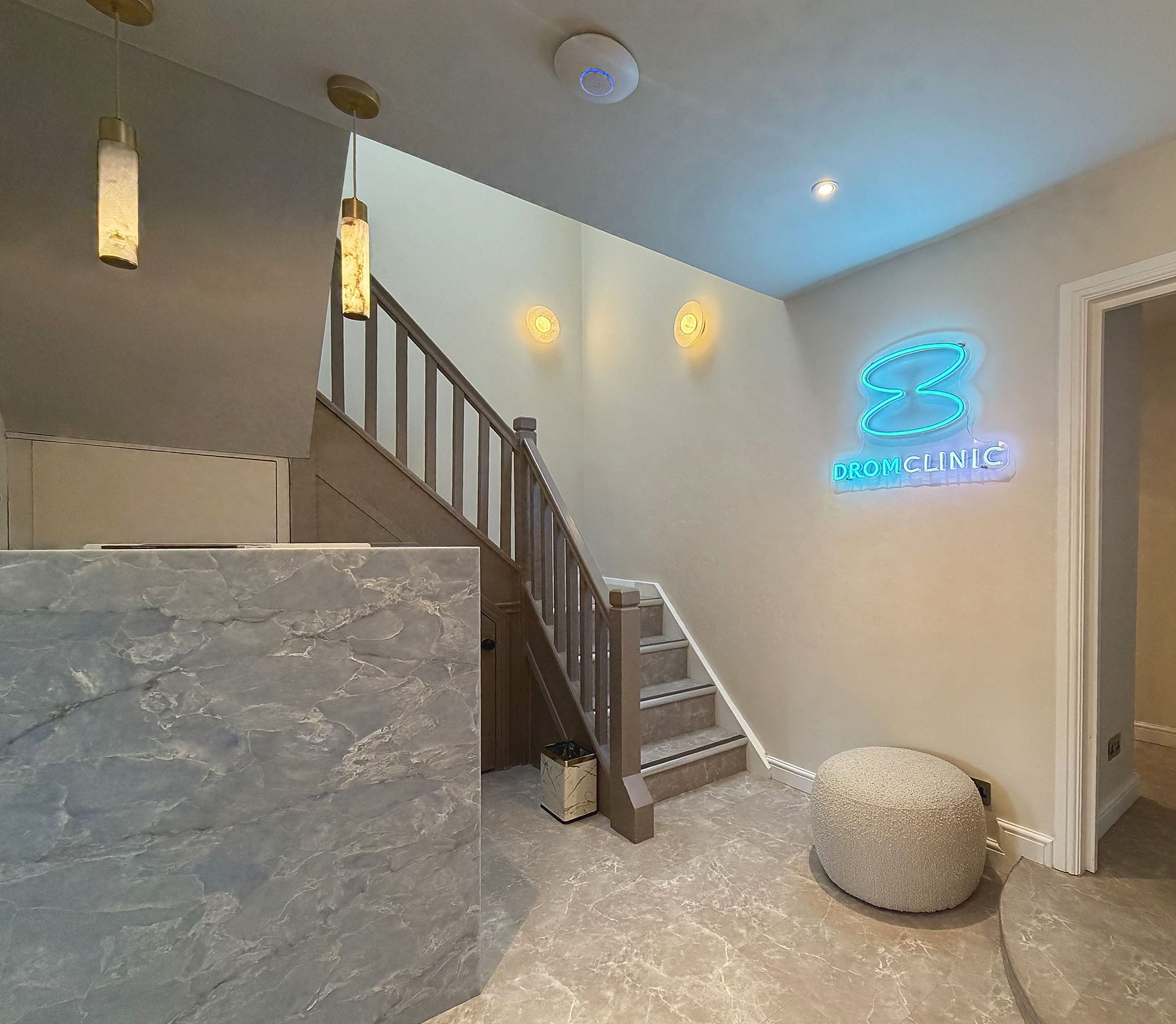
The DROM Clinic reception, with a marble desk, staircase and neon sign
Get in Touch

Begin with a consultation, not a treatment.

Book

By appointment only

Email

hello@dromclinic.com

WhatsApp

+44 7351 842001

Come and visit us

81-83 Walton Street, London SW3 2HP